

Generalized Pustular Psoriasis (GPP) Overview
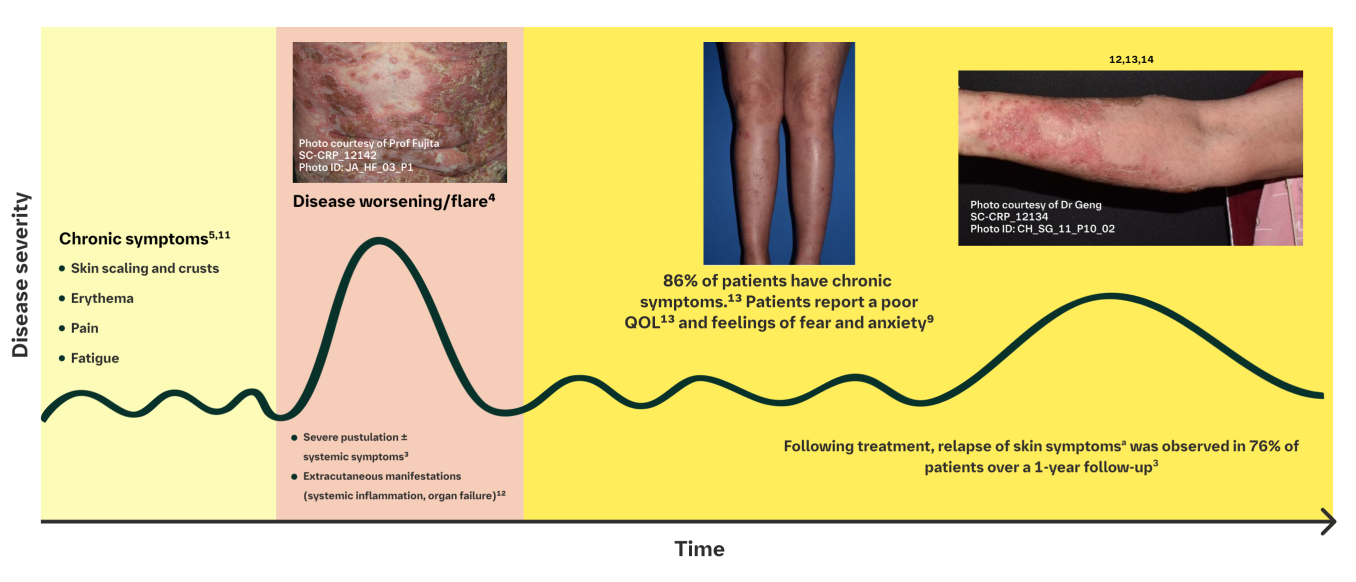
GPP is a chronic, neutrophilic inflammatory skin disease associated with a considerable clinical burden.1-3 It is estimated to affect 1 in 10,000 people in the US4 with a higher predominance in females.5,6 It is a heterogenous disease with symptoms presenting on a spectrum1,2 that includes:
Chronic skin lesions with underlying inflammation7
Sudden onset of rapidly disseminating erythema covered with sterile pustules, crusts and scales, often associated with systemic symptoms (fever, pain, fatigue, malaise)2
GPP is recognized as a separate clinical entity from other forms of psoriasis (ICD-10 code: L40.1); IL-36 pathway is the key driver of GPP and elicits response to treatment, while the IL-17/IL-23 pathway drives plaque psoriasis.8,9
It can be relapsing or persistent, which may require chronic management.1,2 GPP can greatly affect patients’ QOL.10
A National Psoriasis Foundation 2024 consensus statement advocates for timely access to FDA-approved therapies for GPP because delays can increase the risk of mortality in patients with this rapidly progressing disease.11
References
-
Navarini AA, et al. J Eur Acad Dermatol Venereol. 2017;31(11):1792-1799.
-
Puig L, et al. J Acad Dermatol Venereol. 2023;37(4):737-752.
-
Kharawala S, et al. Exp Rev Clin Immunol. 2020;16:239-252.
-
Kam O, et al. J Eur Acad Dermatol Venereol. 2024;38(6):e536-e537.
-
Crowley J, et al. Journal of Psoriasis and Psoriatic Arthritis. 2021;6(3):151-158.
-
Jin H, et al. J Dermatol. 2015;42(7):674-678.
-
Onoufriadis A, et al. Amer J Human Genetics. 2011;89:432-437.
-
Marrakchi S, Puig L. Am J Clin Dermatol. 2022;23(Suppl 1):13-9.
-
Zema CL, et al. JAMA Dermatol. 2022;158(10):1142-8.
-
Reisner DV, et al. Am J Clin Dermatol. 2022;23(Suppl 1):65-71.
-
Armstrong AW, et al. J Am Acad Dermatol. 2024;90:727-30.
-
Strober B, et al. AAD 2021. Poster 26588.
-
Ly K, et al. Psoriasis (Auckl). 2019;9:37-42.
-
Morita A, et al. Lancet. 2023;402(10412):1541-1551.